As the nation celebrates Independence Day, it's also an opportunity to reflect on the remarkable evolution of law enforcement over the past 250 years. Long before modern police departments existed, American communities relied on constables, sheriffs, and volunteer night watchmen to help maintain public safety. In fact, Boston established one of the nation's earliest night watch systems in 1635 - more than 140 years before the signing of the Declaration of Independence.
Following the founding of the United States, one of Congress's first actions was to establish the United States Marshals Service in 1789, making it the nation's oldest federal law enforcement agency. Appointed by President George Washington, the first U.S. Marshals were responsible for carrying out federal court orders, serving warrants, conducting the first national census, and helping establish the rule of law in a young nation.
As America's cities grew, so did the need for organized policing. In 1838, the Boston Police Department became the country's first publicly funded, full-time municipal police department, laying the foundation for many of the policing practices that continue to evolve today. During the 1890s, Police Commissioner Theodore Roosevelt helped professionalize the New York City Police Department by introducing merit-based hiring, entrance exams, and higher standards of accountability - reforms that influenced policing nationwide.
The early 1900s ushered in an era of innovation that forever changed policing. In 1902, fingerprint identification was first introduced in American law enforcement, providing investigators with a groundbreaking new tool for identifying suspects and solving crimes. Just a few years later, in 1908, Oregon earned a distinguished place in policing history when Lola Baldwin joined the Portland Police Bureau, becoming the first woman in the United States hired by a municipality to perform regular police duties. Her pioneering work focused on protecting women and children, but her impact extended far beyond those responsibilities. Baldwin helped pave the way for generations of women in law enforcement, leaving a legacy that continues to inspire more than a century later.
Innovation continued to transform policing in the years that followed. In 1914, the Berkeley Police Department became the first agency in the nation to place all patrol officers in automobiles, dramatically improving mobility and response capabilities. By 1928, police departments were also beginning to embrace radio communications, allowing officers to receive calls and coordinate responses more efficiently - an advancement that would forever change emergency response and officer safety.
Today, law enforcement in the United States includes more than 17,000 agencies of every size and mission, from small rural departments serving just a few hundred residents to the New York City Police Department, the nation's largest municipal police agency, with approximately 35,000 sworn officers serving more than 8 million residents. While the profession has changed dramatically over the past two and a half centuries, its enduring commitment to serving and protecting communities remains at the heart of its mission.
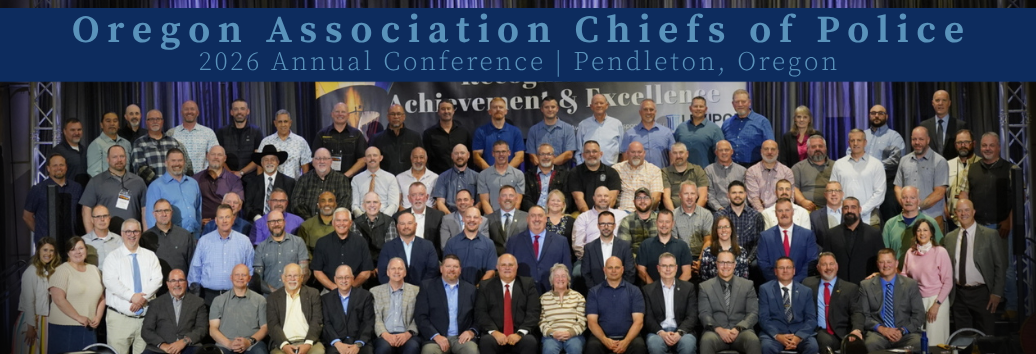
As the nation celebrates Independence Day, the Oregon Association Chiefs of Police proudly recognizes the service and dedication of Oregon's law enforcement professionals. To OACP members across the state, thank you for the leadership, integrity, and unwavering commitment demonstrated each day in service to your communities. Your efforts continue to strengthen public trust while protecting the freedoms and safety of all Oregonians.